 MCP Tools
50 connectors. Zero implicit trust.
Every tool scoped. Every argument typed. Every call logged before it executes.
Two use cases, One layer.
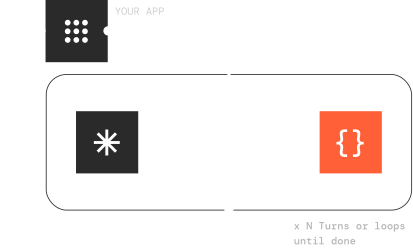
{ LLM → TOOLS }
Via /v1/chat/completions
Verosek runs the LLM ↔ policy ↔ tool ↔ LLM loop internally. Your app sees only the final answer. Every intermediate step is audited.
{ LLM + TOOLS }
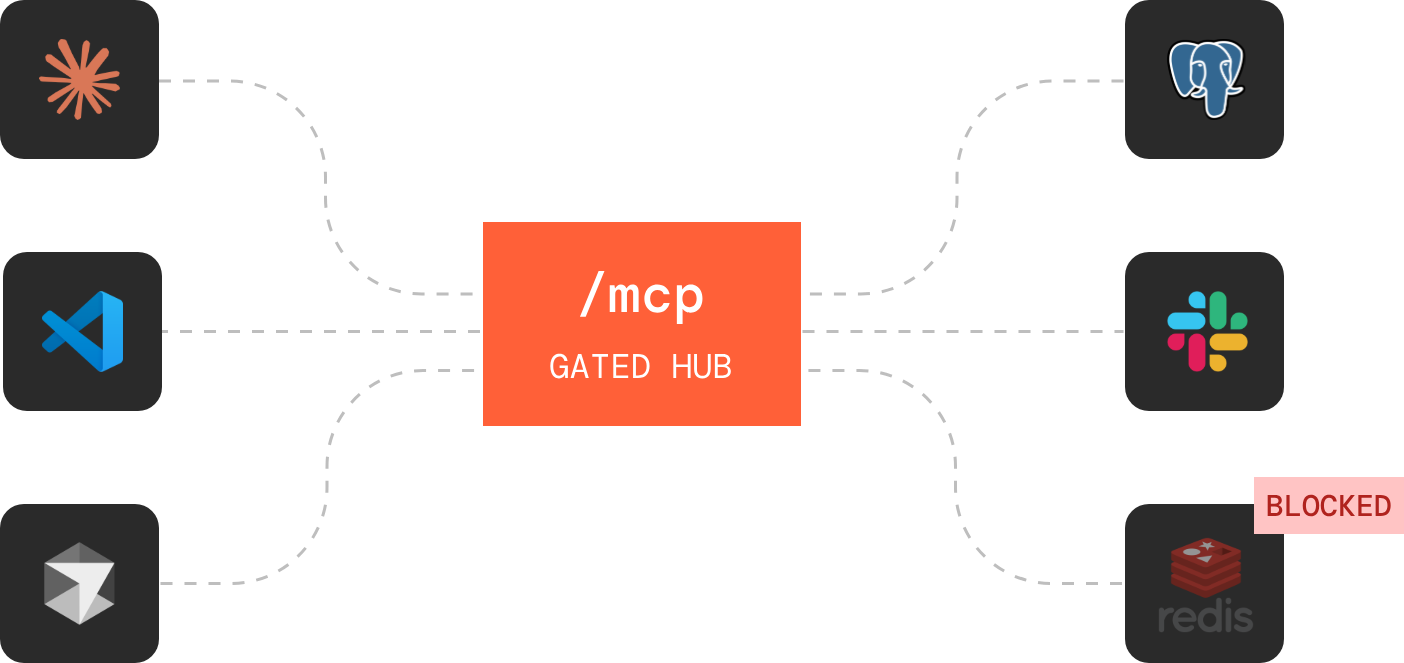
Via /v1/chat/completions
The model streams tool calls to your app. Verosek intercepts each one, enforces policy per virtual key, logs it, and returns the filtered result.
Over 50 scoped connectors across 7 categories.
DBeaver-style rules. Enforced every call.
Not just which tools. Which arguments. Which values.
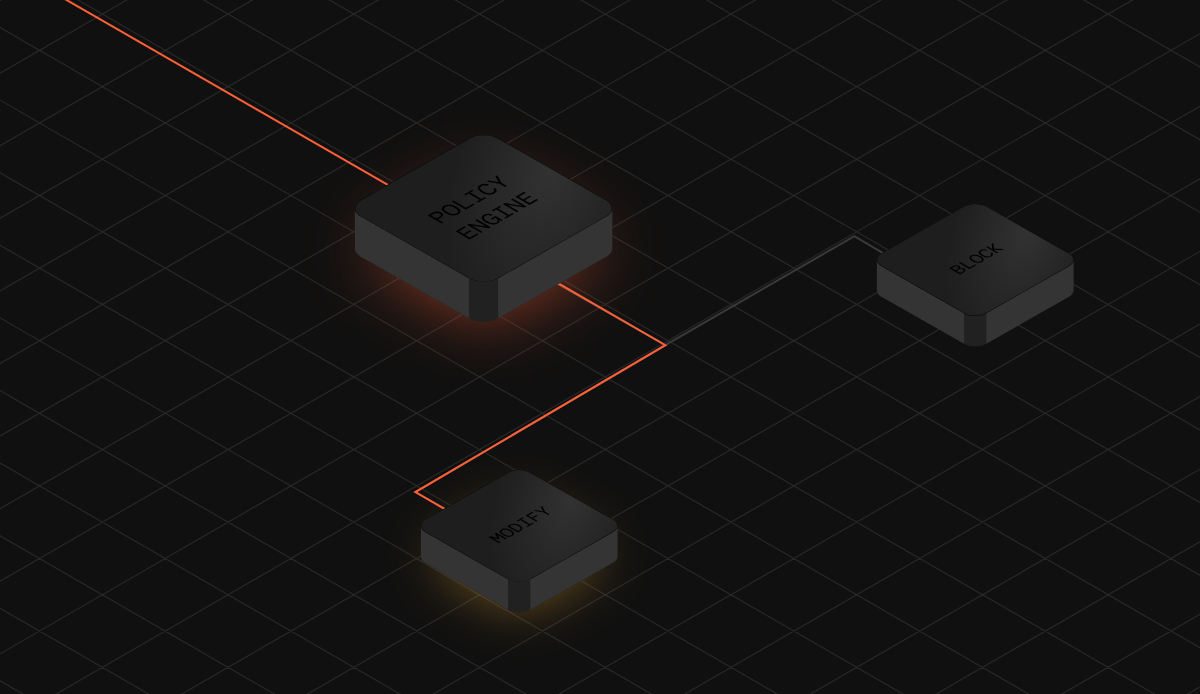
One rule set per tool type. Per virtual key.
Frequently Asked Questions
It runs the tool for you, under your rules. The agent requests an action. Verosek checks it against policy, executes it through a governed connector, and returns the result. You never write tool-execution or permission code.
The agent never touches your systems directly. Every call passes through a controlled boundary that can narrow it, mask it, cap it, or block it before it lands. A direct integration has to trust the model. Verosek does not.
Yes, down to individual operations, fields, and arguments, per key. Two agents can share one connection and still have completely different powers.
Every one. The same signed record that covers model calls covers tool calls, so there is no gap between what the model said and what it actually did.